
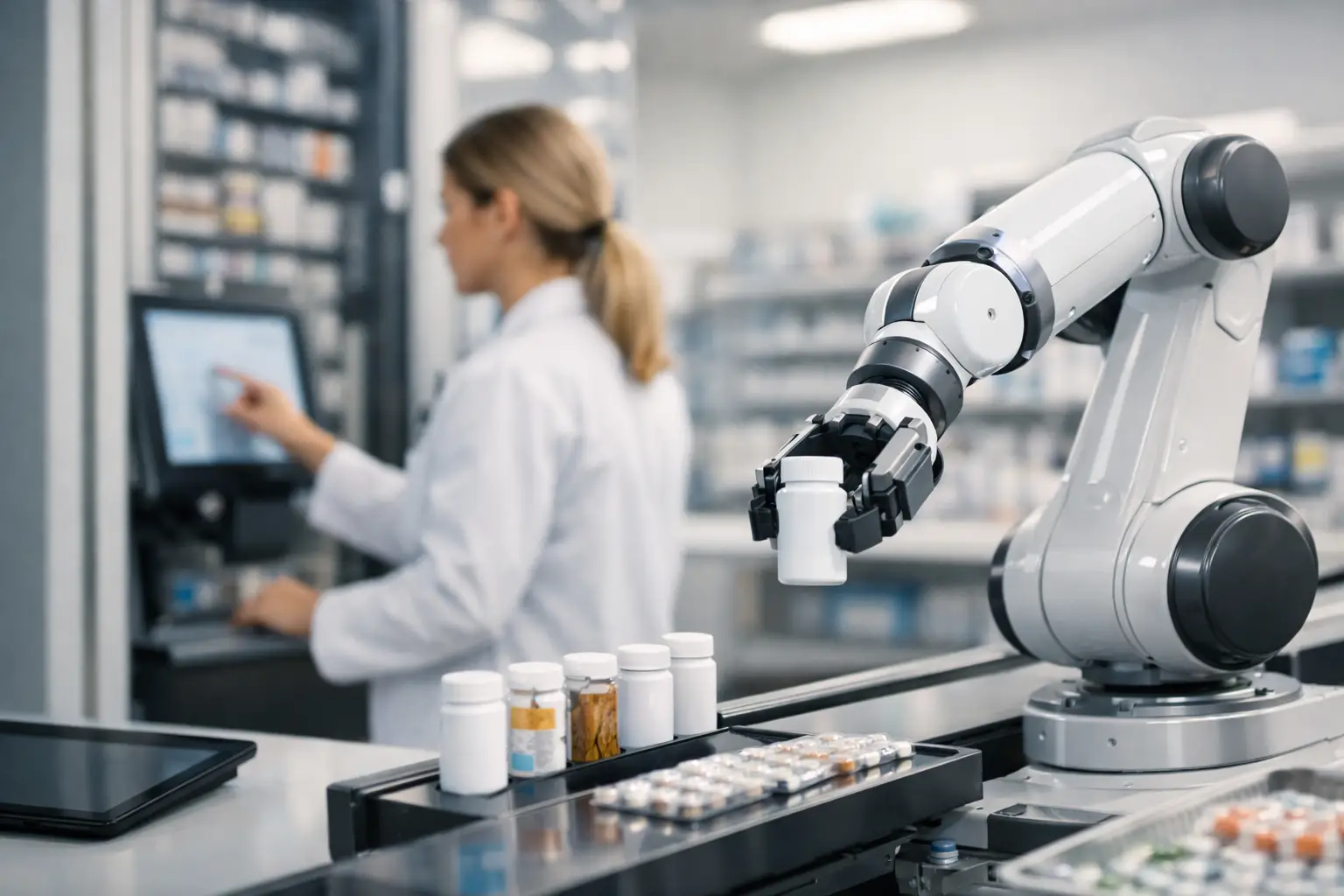
A prescription queue that keeps growing, repeated stock checks, constant interruptions at the counter, and pressure to deliver faster service with the same team – that is the daily context shaping the future of pharmacy automation. For pharmacy owners and managers, automation is no longer a side topic tied only to dispensing technology. It is becoming a core operating decision that affects labor allocation, front-of-store performance, patient experience, and long-term business resilience.
Why the future of pharmacy automation matters now
Automation discussions used to center on speed. That is still part of the story, but it is no longer the most strategic one. The real question is how technology changes the role of the pharmacy itself. A pharmacy that automates repetitive tasks can redirect staff time toward counseling, vaccination support, medication synchronization, adherence conversations, and higher-value retail interactions. That shift matters in a market where margins are tight and differentiation is harder to sustain.
At the same time, expectations are changing on the patient side. Consumers are more comfortable with digital ordering, faster pickup, delivery coordination, and proactive communication. They may still value personal advice from a pharmacist, but they increasingly expect the operational side to be efficient and predictable. Automation helps meet that expectation, although it does not replace the judgment, trust, and communication that define pharmacy practice.
This is why the future of pharmacy automation should be viewed as a business model issue, not just an equipment purchase. The pharmacies that benefit most will be those that connect automation to workflow redesign, staff development, and service positioning.
From dispensing support to operating system
The next phase of automation is broader than robotic dispensing. Automated storage and retrieval, packaging systems, inventory monitoring, workflow dashboards, refill reminders, queue management, and communication tools are converging into a more integrated operating environment. In practical terms, this means pharmacies will rely less on isolated devices and more on connected systems that support daily decisions.
That integration has commercial implications. Better inventory visibility can reduce overstocking and stockouts. More accurate dispensing processes can lower rework and exception handling. Faster prescription preparation can shorten wait times at peak hours. Each of those gains may look operational on paper, but together they influence patient retention, team efficiency, and store profitability.
Still, integration is where many projects become difficult. A pharmacy may install an automated dispensing unit and discover that the real bottleneck was not filling but verification, communication, or poor task allocation at the bench and front counter. Technology improves performance most when owners are clear about which problem they are trying to solve.
What the future of pharmacy automation will likely look like
Over the next several years, automation in pharmacy will become more selective, more connected, and more data-driven.
Smarter workflow orchestration
Many pharmacies already use software to manage prescriptions, but future systems will do more than record transactions. They will prioritize tasks based on urgency, staffing levels, pickup patterns, and prescription complexity. Instead of simply showing what is in the queue, they will help teams decide what to process first, what can be batched, and where delays are forming.
For managers, this creates a more measurable operation. You can identify whether performance issues stem from staffing gaps, poor scheduling, inventory exceptions, or uneven demand across the day. That matters because not every delay requires more labor. Sometimes it requires better sequencing.
Inventory automation with fewer blind spots
Inventory is one of the clearest opportunities. Automated stock tracking, low-level alerts, expiration monitoring, and ordering support can reduce waste and improve working capital control. In a pharmacy environment, that is not just a financial issue. It also affects service consistency and the credibility of the business when patients expect immediate fulfillment.
The next step will be tighter alignment between prescribing trends, seasonal demand, promotional planning, and stock management. Pharmacies that use automation only for storage will miss part of the value. The stronger use case is combining inventory intelligence with commercial and clinical demand patterns.
Better patient communication tied to workflow
One underappreciated area is communication automation. Refill reminders, order status notifications, pickup readiness messages, and adherence prompts can reduce friction for both staff and patients. When communication tools connect directly to pharmacy workflow, teams spend less time managing avoidable calls and more time on meaningful interactions.
This is especially relevant for pharmacies trying to balance service quality with higher transaction volume. Automated communication should not sound mechanical or impersonal. Used well, it removes routine friction and protects time for counseling that actually requires professional attention.
More centralization, but not the same model for everyone
Larger groups and chains may continue moving repetitive dispensing tasks into centralized or hub-based models, leaving local pharmacies to focus on patient-facing care and service delivery. Independent pharmacies may adopt parts of that logic through shared services, off-site packaging support, or selective in-store automation.
But the right model depends on prescription mix, store size, labor availability, and patient expectations. A high-volume urban pharmacy has different needs from a neighborhood pharmacy built on long-standing personal relationships. The future is not one standard format. It is a range of operating models supported by different levels of automation.
The business case is real, but it is not automatic
Automation is often presented as a direct route to lower costs. Sometimes it is. More often, the returns are mixed and depend on execution. Equipment, software, maintenance, training, and process redesign all have costs. If a pharmacy invests in technology without changing how work is assigned, measured, and managed, the financial results may disappoint.
The strongest business case usually comes from a combination of gains: fewer dispensing errors, faster turnaround, better labor utilization, improved stock control, and stronger patient retention through more reliable service. None of these benefits should be viewed in isolation. A pharmacy that saves technician time but loses patient satisfaction because communication remains poor has only solved part of the problem.
There is also a leadership issue here. Automation changes roles. Some tasks become less manual, while others require stronger oversight, exception handling, and data interpretation. Owners and managers need to prepare teams for that shift instead of presenting automation as a silent back-room upgrade.
The human side of automation
A common concern in pharmacy is whether automation reduces the human value of the profession. In reality, poor implementation creates that risk more than the technology itself. If automation is introduced only as a speed tool, staff may feel monitored, rushed, or displaced. If it is introduced as a way to create more time for patient care, service expansion, and better workload balance, adoption tends to be stronger.
That distinction matters. Pharmacy remains a trust-based setting. Patients notice efficiency, but they remember clarity, empathy, and confidence. The most effective pharmacies will use automation to protect those human moments, not crowd them out.
For this reason, staff involvement should begin early. Teams often know exactly where wasted motion, repeated interruptions, and preventable errors occur. Their input can shape a smarter investment decision than vendor features alone.
What pharmacy owners should evaluate before investing
The practical question is not whether automation is coming. It is where it creates value first.
Start with workflow mapping. Identify where prescriptions stall, where inventory errors happen, how often staff are interrupted for status questions, and which tasks consume time without adding professional value. Then assess whether the issue is volume, layout, training, scheduling, communication, or technology. Automation is powerful, but it is not a cure for every weak process.
It also helps to evaluate scale honestly. A pharmacy with moderate volume may benefit more from communication automation, inventory visibility, and queue management than from a large dispensing robot. Another pharmacy with sustained high volume may justify a bigger capital investment because labor pressure and error risk are materially higher. The answer depends on throughput, case mix, and service goals.
Finally, consider the patient promise behind the investment. Faster filling is useful, but what will the pharmacy do with the time it gains? Expand immunization workflow, improve counseling, develop adherence support, strengthen front-of-store engagement, or reduce burnout during peak hours? That answer turns automation from a technical project into a business strategy.
For a trade-focused platform such as Pharmacy management & COMMUNICATION, this is where the topic becomes most relevant. The future of pharmacy automation is not mainly about machines replacing tasks. It is about pharmacies redesigning operations so professional care, commercial performance, and patient communication work better together.
The pharmacies that move wisely will not be those with the most technology on the floor. They will be the ones that choose the right tools, train their teams well, and use every efficiency gain to deliver a more dependable, more valuable patient experience.